Tomb Raiding
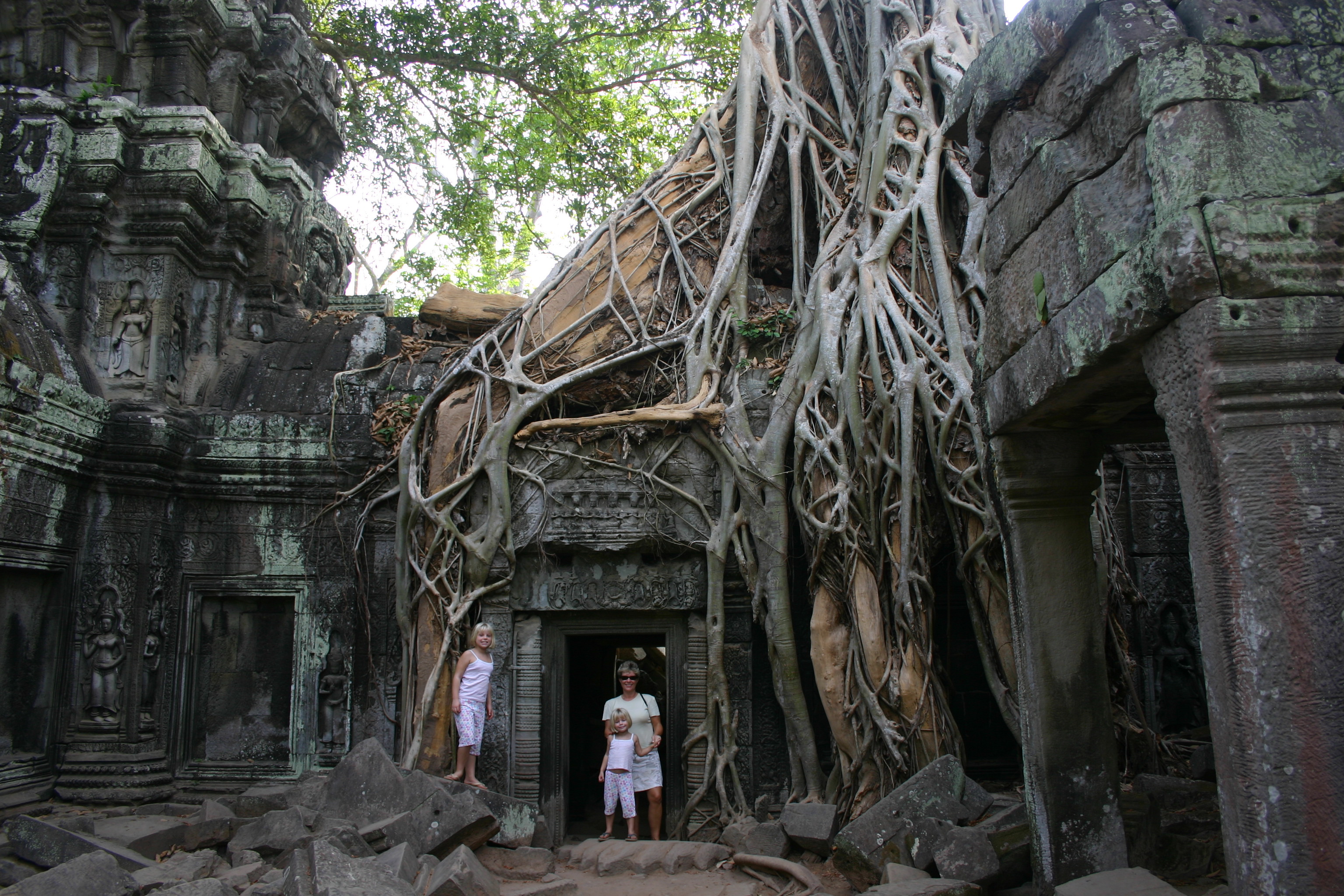
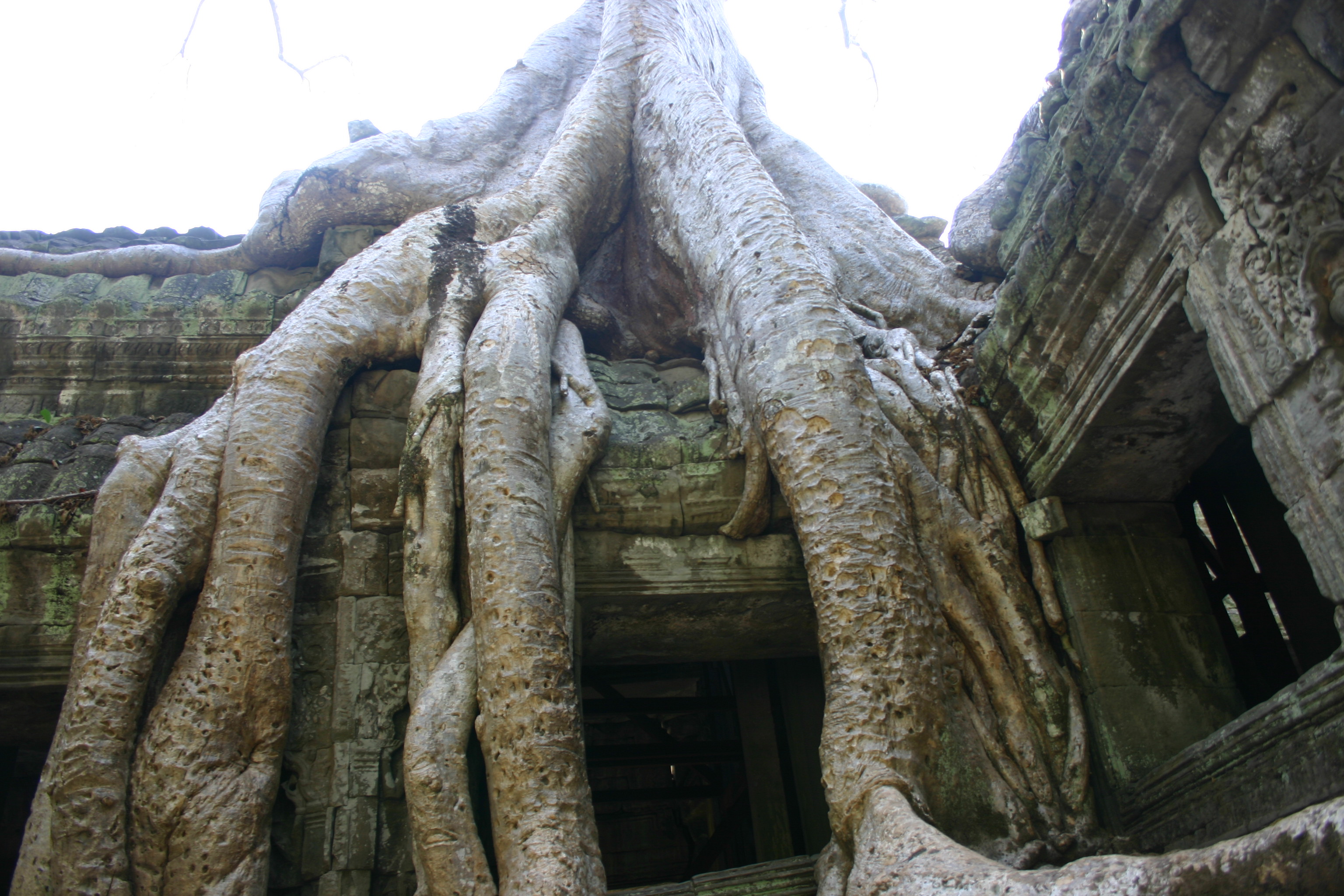 Today's
temple was Ta Prohm, which is the one which has been taken over by the
jungle. Although much of the undergrowth has been removed, its still
astonishing to see trees growing over, around and through the temple
complex. The roots of the trees wind their way between the stones of
the walls, and as they grow they literally pull the walls apart. As
we'd chosen to visit early, we again had the luxury of an almost empty
temple, which was a fantastic way to see the site. We already knew that
some of the Tomb Raider film was shot here, but we also discovered that
during the making of "Two Brothers" here 2 years ago, they had released
a tiger to roam around the inside of the temple. Glad we missed that!
The temple is like a rabbit warren - numerous passageways and doors
blocked by piles of falling rubble, and it was really easy to get lost
inside. By 9 o'clock the first bus tour had arrived and the temple suddenly
started to fill with people - it changed the character of the temple
from the deserted overgrown jungle temple that we'd experienced earlier
(When people with American accents start bellowing "Chuck, move left
and make your hands look like you're holding that tree up" you know
that the magic has gone!)
Today's
temple was Ta Prohm, which is the one which has been taken over by the
jungle. Although much of the undergrowth has been removed, its still
astonishing to see trees growing over, around and through the temple
complex. The roots of the trees wind their way between the stones of
the walls, and as they grow they literally pull the walls apart. As
we'd chosen to visit early, we again had the luxury of an almost empty
temple, which was a fantastic way to see the site. We already knew that
some of the Tomb Raider film was shot here, but we also discovered that
during the making of "Two Brothers" here 2 years ago, they had released
a tiger to roam around the inside of the temple. Glad we missed that!
The temple is like a rabbit warren - numerous passageways and doors
blocked by piles of falling rubble, and it was really easy to get lost
inside. By 9 o'clock the first bus tour had arrived and the temple suddenly
started to fill with people - it changed the character of the temple
from the deserted overgrown jungle temple that we'd experienced earlier
(When people with American accents start bellowing "Chuck, move left
and make your hands look like you're holding that tree up" you know
that the magic has gone!)Then we called into the temple of Bantai Prae, when the girls stayed in the tuk-tuk and we had a quick wander through - but it was probably one temple too many for now - they have all started to look very 'samey'. So by 10:30, we were back in the tuk-tuk, heading into town. On the way we stopped at one of the big tourist souvenir shops, to see if the things they had were different to the things we'd seen in the market. These shops are the ones they take busloads of tourists to, especially Japanese and Koreans, because they don't travel around town independently, and certainly wouldn't get down to the Old Market area (and the tour guides would discourage them, even if they had the time in their busy schedules). We found that the shops sold exactly the same things (wood carvings, stone carvings and paintings), but at hugely inflated prices - a replica of the Angkor stone faces costing $7 in the market, cost $110 in the shop! (Although the kind lady in the shop offered me a 'special' discounted price of $90).
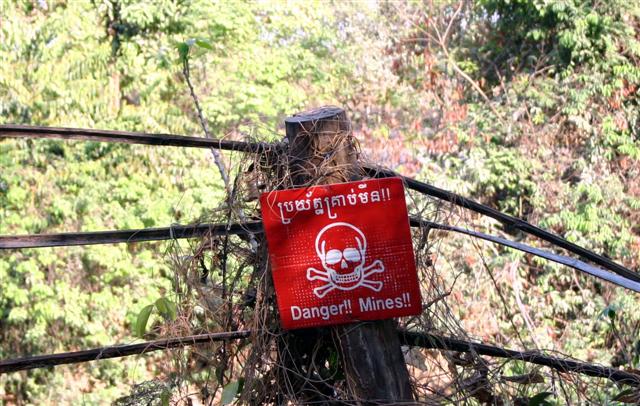 Two
days ago we visited the Government-owned War Museum, and this afternoon
we visited the privately-owned Landmine Museum. Both of them told the
same story, of the terrible impact on the country of the Vietnam War,
the Khmer Rouge period, and the continued civil war which ran until
1998. Although the displays focused on land mines, artillery, tanks
and guns, it was the personal stories of suffering which will be the
memories. At the War Museum, our guide was a 25-year old man who's brother
was killed in front of him by Khmer Rouge guerrillas, who had lost his
arm in the same attack, and had then heard that his parents had been
killed by guerrillas while he was recovering in hospital. His parents
had been killed with a spade for not handing over their water buffalo
to the Khmer Rouge. Before coming to Cambodia we had read two books
covering the Khmer Rouge period, so we have a basic understanding of
the recent history of the country, and the impact on families of so
many random, brutal deaths. We definitely found it difficult to listen
to the personal story of family death, while looking at a display of
AK47 and M16 rifles.
Two
days ago we visited the Government-owned War Museum, and this afternoon
we visited the privately-owned Landmine Museum. Both of them told the
same story, of the terrible impact on the country of the Vietnam War,
the Khmer Rouge period, and the continued civil war which ran until
1998. Although the displays focused on land mines, artillery, tanks
and guns, it was the personal stories of suffering which will be the
memories. At the War Museum, our guide was a 25-year old man who's brother
was killed in front of him by Khmer Rouge guerrillas, who had lost his
arm in the same attack, and had then heard that his parents had been
killed by guerrillas while he was recovering in hospital. His parents
had been killed with a spade for not handing over their water buffalo
to the Khmer Rouge. Before coming to Cambodia we had read two books
covering the Khmer Rouge period, so we have a basic understanding of
the recent history of the country, and the impact on families of so
many random, brutal deaths. We definitely found it difficult to listen
to the personal story of family death, while looking at a display of
AK47 and M16 rifles.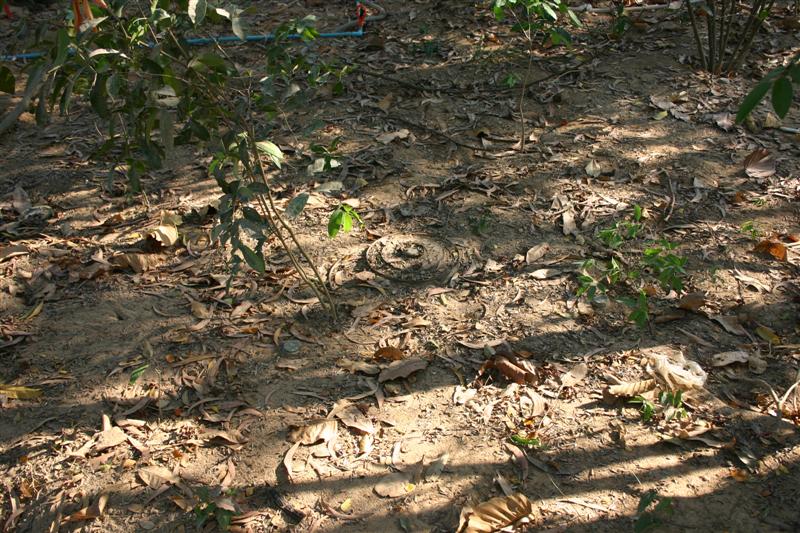 There
was also a simulated minefield setup in the garden - even more moving
since we knew that mines like these were laid all over Cambodia, and
although some areas like the Angkor temples have been cleared, most
others still lie in the ground and in paddy fields, waiting for somebody
to stand on them. (If you want an innocent challenge, there are four
mines in the photo on the left). One of the
There
was also a simulated minefield setup in the garden - even more moving
since we knew that mines like these were laid all over Cambodia, and
although some areas like the Angkor temples have been cleared, most
others still lie in the ground and in paddy fields, waiting for somebody
to stand on them. (If you want an innocent challenge, there are four
mines in the photo on the left). One of the 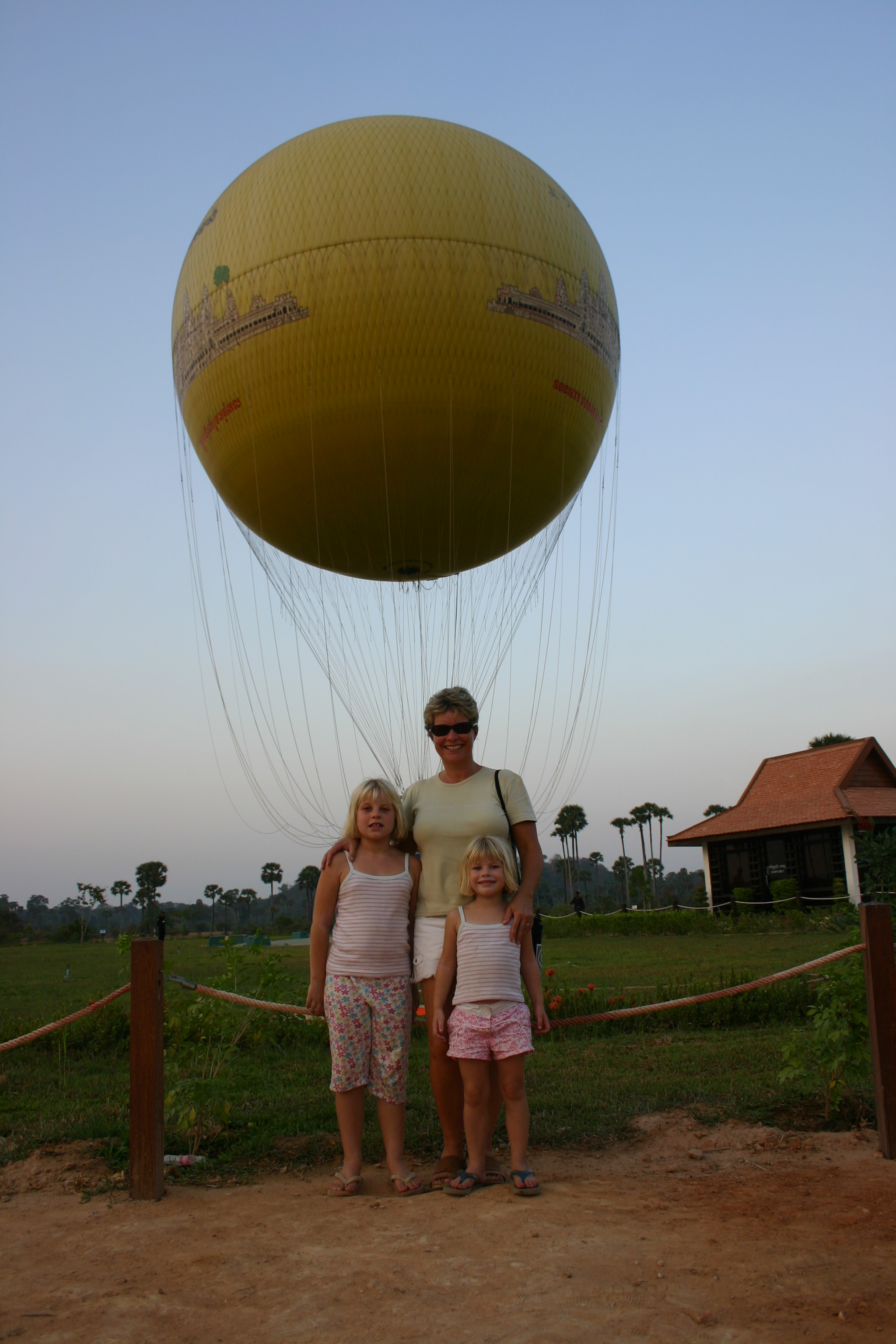 Somewhat
incongruously we went from the Landmine Museum to the Angkor Wat balloon
- a huge helium balloon which carries up to 12 passengers 200 metres
into the air to get a view of the main Angkor Wat temple and the surrounding
forests and fields. We'd chosen sunset to do it, so on one side we could
see the sun turn dark red as it dipped, and on the other the reflection
of that colour on the dark stones of the temple. Because it is the dry
season, the view to the temple was hazy and unforgettable. Below us
we could see paddy field after paddy field sitting dry and empty, waiting
for the first rains of the monsoon season in May, when the farmers will
all be out planting their rice plants in the flooded fields. From up
high it was possible to get a real idea for the size of the Angkor site,
and the way that much of it has been taken over by forest and jungle.
Somewhat
incongruously we went from the Landmine Museum to the Angkor Wat balloon
- a huge helium balloon which carries up to 12 passengers 200 metres
into the air to get a view of the main Angkor Wat temple and the surrounding
forests and fields. We'd chosen sunset to do it, so on one side we could
see the sun turn dark red as it dipped, and on the other the reflection
of that colour on the dark stones of the temple. Because it is the dry
season, the view to the temple was hazy and unforgettable. Below us
we could see paddy field after paddy field sitting dry and empty, waiting
for the first rains of the monsoon season in May, when the farmers will
all be out planting their rice plants in the flooded fields. From up
high it was possible to get a real idea for the size of the Angkor site,
and the way that much of it has been taken over by forest and jungle.