Monks – everywhere!
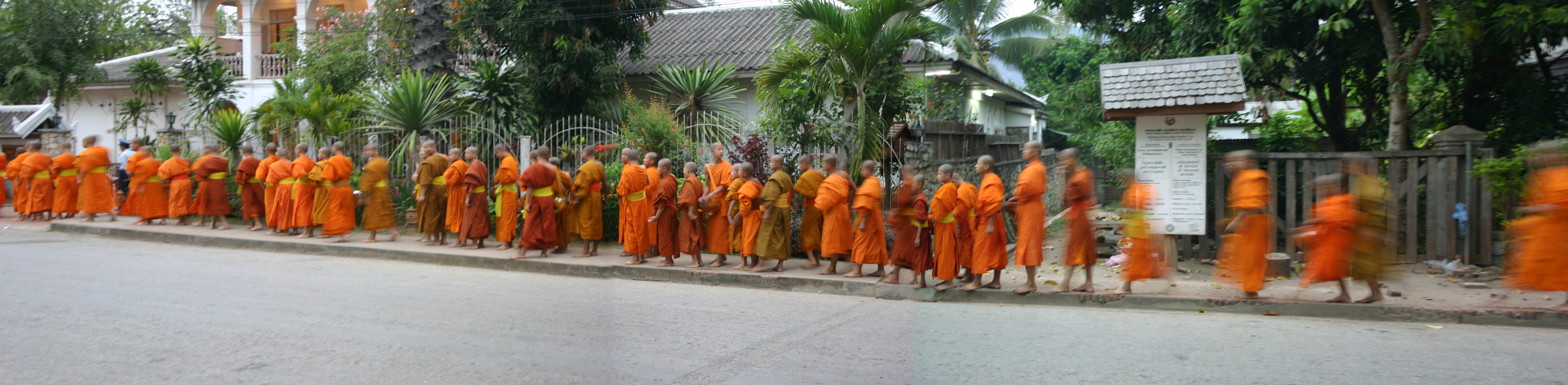
Wherever you go in Luang Prabang, the monks are inescapable. On every street corner, set of steps and pavement, there is normally a monk chatting or hurrying between temples. It is one of the things which makes Luang Prabang stand out as an other-world place.
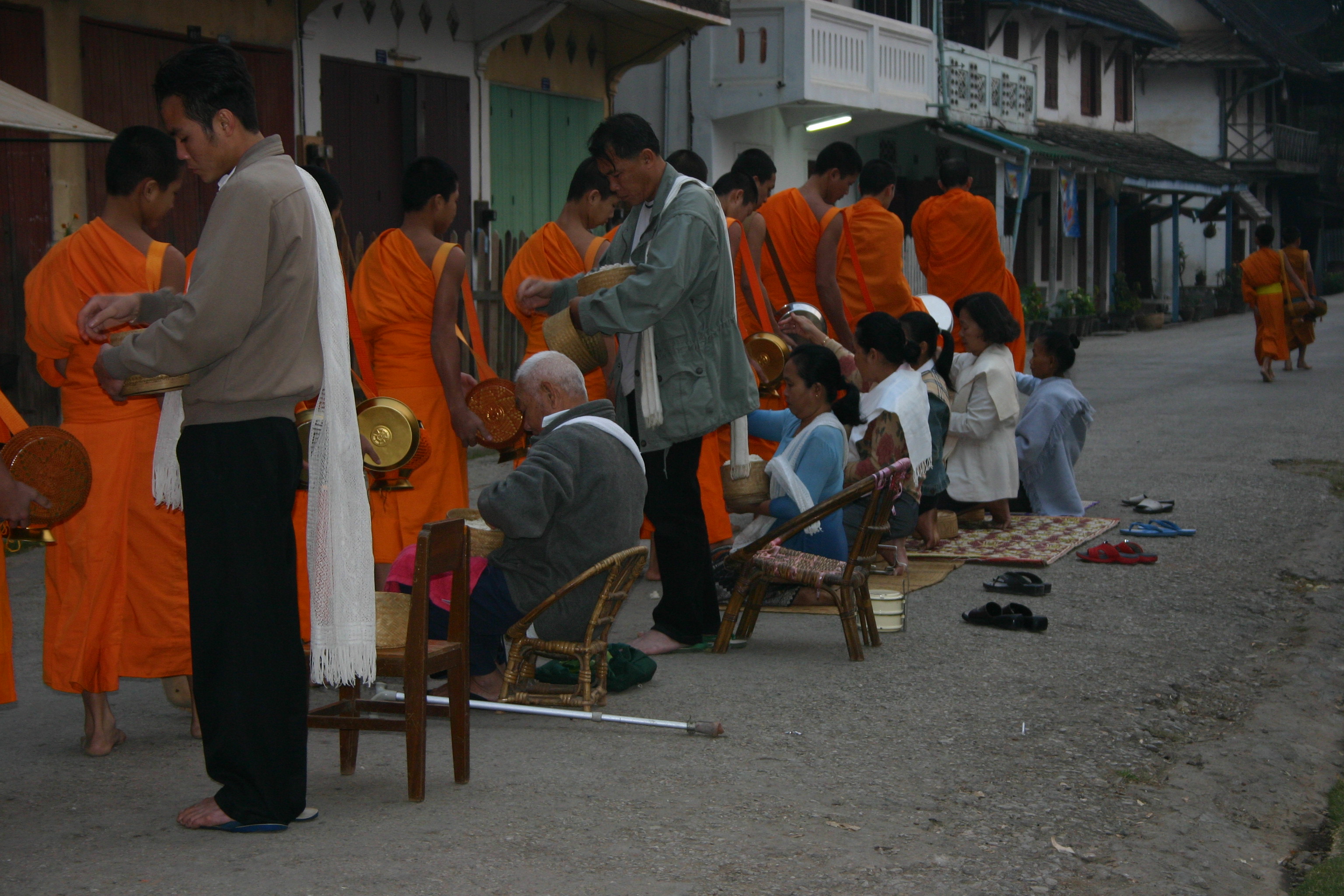 At
6.30 in the morning, the monks leave their monasteries and temples,
wearing just their orange robes, and carrying a silver alms bowl. They
walk around the streets of the city, receiving gifts of sticky rice
from the townsfolk, who get up each morning to give each monk a small
amount of rice. As there are dozens of people doing this, the monks
receive a days supply of rice.
At
6.30 in the morning, the monks leave their monasteries and temples,
wearing just their orange robes, and carrying a silver alms bowl. They
walk around the streets of the city, receiving gifts of sticky rice
from the townsfolk, who get up each morning to give each monk a small
amount of rice. As there are dozens of people doing this, the monks
receive a days supply of rice. We tried to relate this back to village life at home – could we imagine Father Hugh going round the village begging for his lunch, collecting one scrap of scrambled egg here, another there? And could we imagine us, as parishioners getting up at 6 o'clock to cook it, and then waiting on bended knees on the pavement for him? I don't think so.
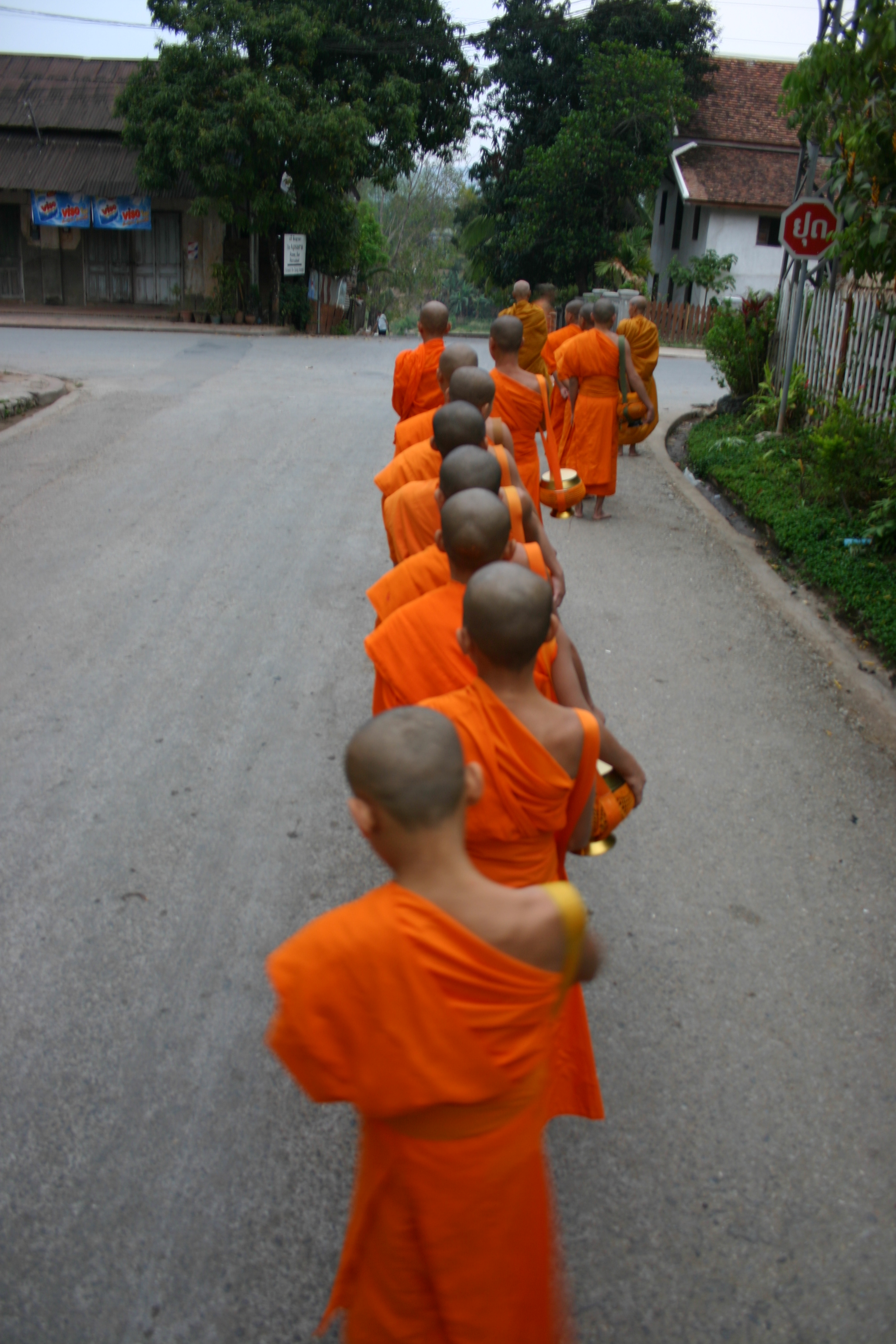
 There
are hundreds of monks involved too, each queuing patiently in the cold
air, wearing no shoes and only their light saffron robes. In fact, there
are so many monks doing this, that sometimes they have to have a system
of 'traffic control' to stop the separate columns interfering with each
other (in the picture on the left, the column going straight ahead,
has to wait for the column from the left to cross, before they can move
forward. It took about 5 minutes!). After that the monks and novices
return to their temples, to eat breakfast and prepare for their studies.
There
are hundreds of monks involved too, each queuing patiently in the cold
air, wearing no shoes and only their light saffron robes. In fact, there
are so many monks doing this, that sometimes they have to have a system
of 'traffic control' to stop the separate columns interfering with each
other (in the picture on the left, the column going straight ahead,
has to wait for the column from the left to cross, before they can move
forward. It took about 5 minutes!). After that the monks and novices
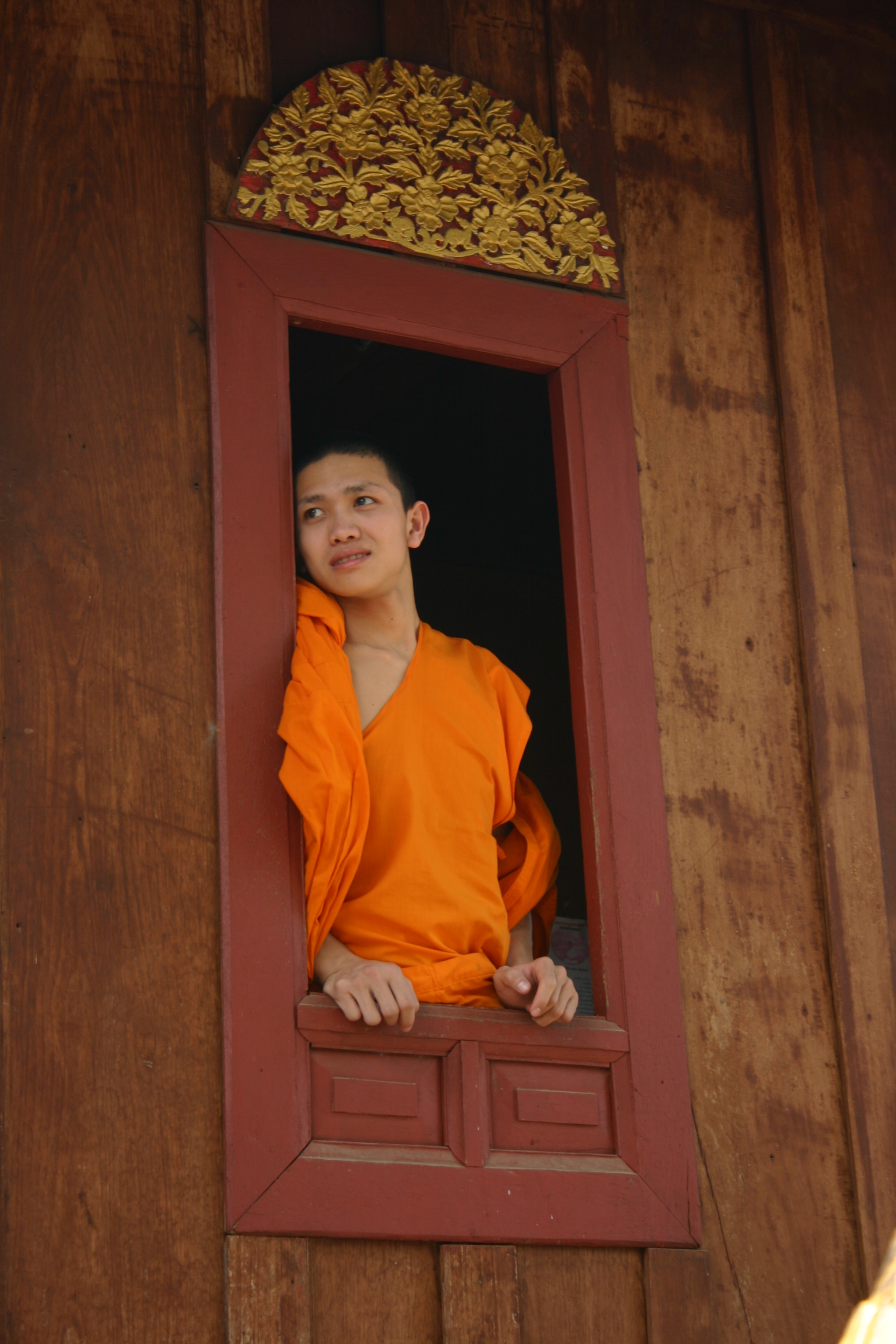
return to their temples, to eat breakfast and prepare for their studies. In
Laos, every man must become a monk for a few days before he marries,
so the monasteries and temples are full of novice monks, all with newly
shaven heads. Some of the novices do only stay for a short while, but
others are there for 3 to 5 years, with only one trip a year back to
visit their families. We met novices as young as 8, living in the temples,
away from their families. But it's not as archaic as it sounds – in
their lessons they learn Buddhism and restoration of temples, but also
algebra, art and other technical skills. And we saw that each evening
some of the novices would hot-foot it down to the Internet cafes in
town to surf the web and knock out a couple of emails.
In
Laos, every man must become a monk for a few days before he marries,
so the monasteries and temples are full of novice monks, all with newly
shaven heads. Some of the novices do only stay for a short while, but
others are there for 3 to 5 years, with only one trip a year back to
visit their families. We met novices as young as 8, living in the temples,
away from their families. But it's not as archaic as it sounds – in
their lessons they learn Buddhism and restoration of temples, but also
algebra, art and other technical skills. And we saw that each evening
some of the novices would hot-foot it down to the Internet cafes in
town to surf the web and knock out a couple of emails.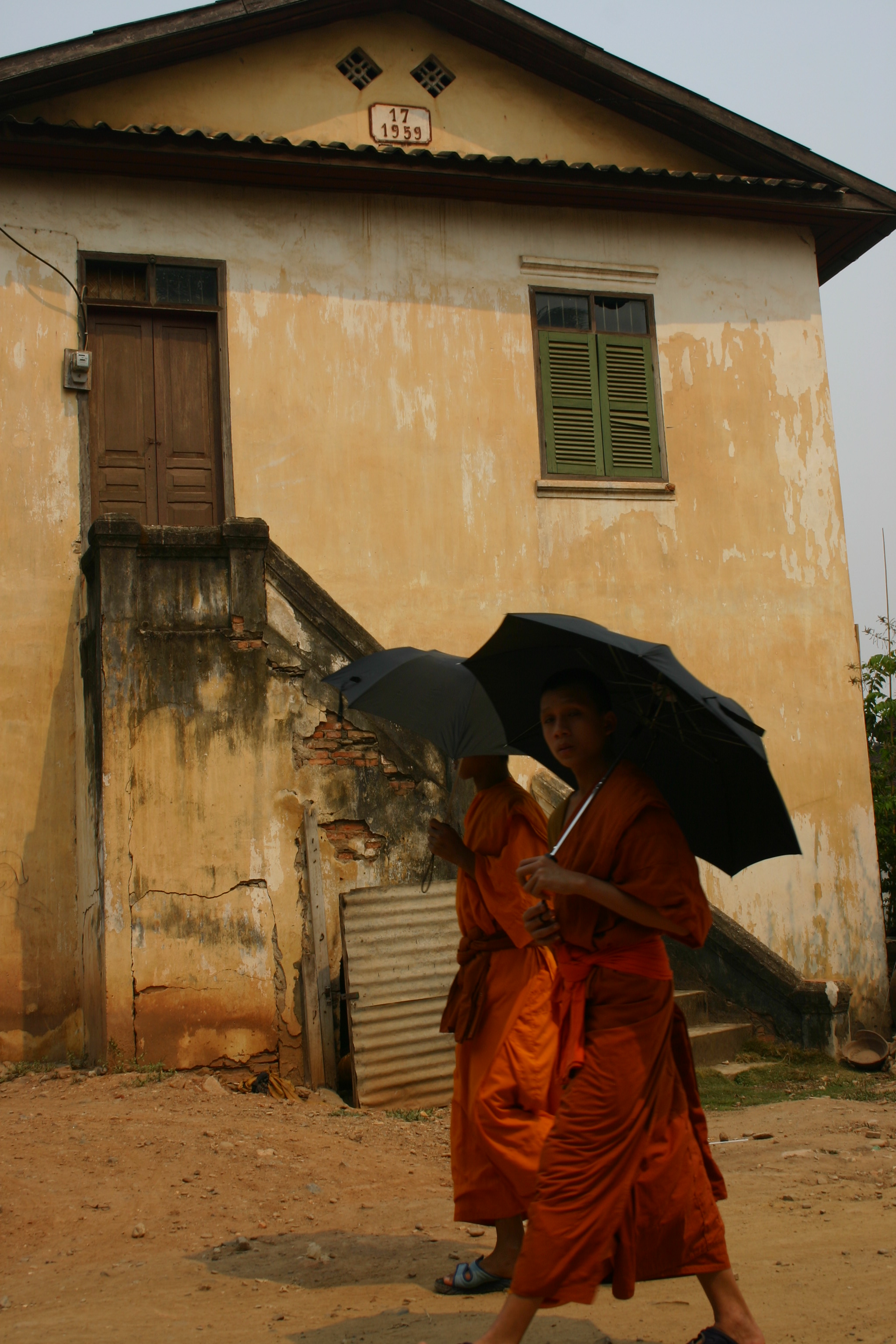
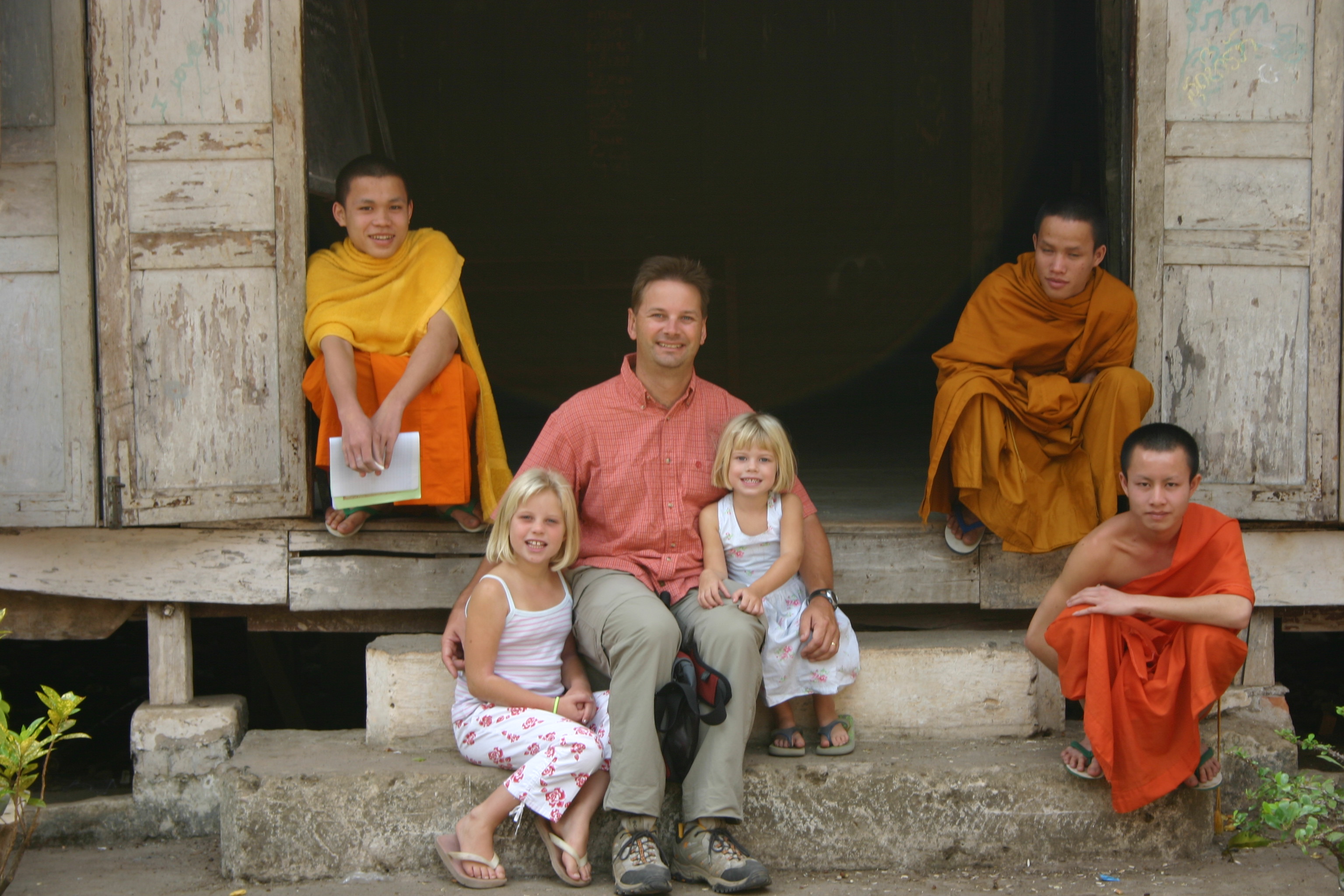 All
of the monks would spend their days in and around the temples, and were
keen to practice their English on anybody who said 'hello'. They also
went all giggly in the presence of Charlotte and Emily. Each day we'd
pass through the grounds of the same temples, and strike up conversations
with the same monks about their lessons today, or particular questions
they had for us, or we had for them. Although none of them were superbly
fluent in English, they knew enough for us to talk about most things,
and their English was a damn sight better than our Laos!
All
of the monks would spend their days in and around the temples, and were
keen to practice their English on anybody who said 'hello'. They also
went all giggly in the presence of Charlotte and Emily. Each day we'd
pass through the grounds of the same temples, and strike up conversations
with the same monks about their lessons today, or particular questions
they had for us, or we had for them. Although none of them were superbly
fluent in English, they knew enough for us to talk about most things,
and their English was a damn sight better than our Laos!